Gallery-Archive 2025
Thebu leaves (Costus speciosus)
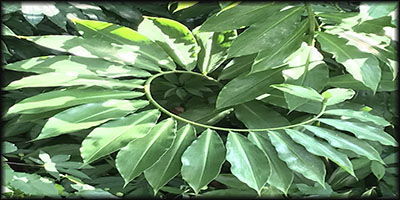
The Thebu plant can be seen several places in Sri Lanka, especially in abandoned lands. It is grown naturally as a shrub. Stems are appeared as branched or unbranched. They are firm and normally 1 m in height. Leaves are spirally arranged with 20 cm in length and 10 cm in wide. Leaves of this herbal plant are consumed as ‘Mallum’ or ‘Sambol’. Most sugar patients consume these leaves in order to reduce their sugar levels. However, people consider this plant ed as a beautiful plant to be grown in the garden.
Thotilla or Thotila (Broken Bones Tree)
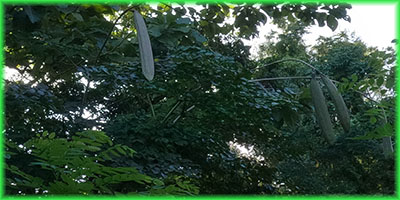
This plant grows up to eight meters in height. The plant can be seen in shrubbery lands in Sri Lanka. Leaves are oval or triangle. Tree is a night bloomer. Flowers are adopted to natural pollination by bats. They produce enormous Seeds pod (fruits) that are 75 cm long and 9 cm wide. Seeds are spread around with winds. Stems are with thick bark. Stem bark and roots are used for medical treatments by villagers in ayurvedic medicines. Villagers in Sri Lanka crush stem bark and then rub on the surface of swelled parts of the body as a treatment.
Bulu(Myrabalans)
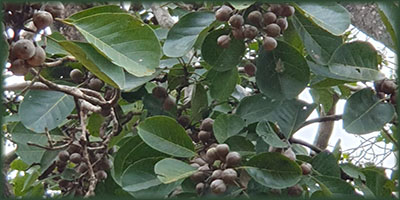
Bulu is the Sinhala name for this tree. It is known in English as Myrabalans. This can be seen in wet Zones as well as dry zones in Sri Lanka. This huge tree grows in forests other than home gardens. The leaves of the tree are crowded and seem as spirally arranged. At the top of the branches, they are clustered. The leaves in oval shape 14 – 20 cm in length and 4-11 cm in width. Flowers are small and white in color. Fruits are elliptic and global shape. Fruits of this tree are used at the Traditional Ayurvedically practices in Sri Lanka with other two types of fruits , “Aralu”, “Nelli”. These three kinds of fruits are typically dried and ground into powder to make medicine which is known as ‘Thipala’. Peoples living near in forests collect ‘Bulu ‘fruits to sell Ayurvedically medicine collectors. Fleshy of the Bulu fruits are available in boutiques of Sinhala Ayurvedic medicine drugs in Sri Lanka.
Nil katarolu
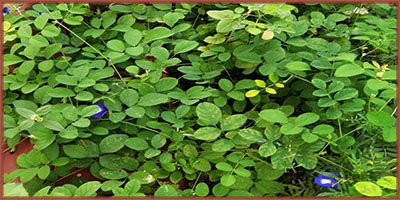
Nil katarolu is a known name in Sinhala while it’s known as Blue Butterfly Pea Flower in English. However, other names which used for the same plant are Ktarolu, Katarodu wel and Nil katarodu. Normally, the creepy nil katarolu plant grows about 2 meters long. Flowers are blue in color. People in Sri Lanka use these flowers at worshiping in temples. Further, based on the Aryurvedic medicine value of these flowers and leaves, Sri Lankans prepare conjee, milk rice, hoppers etc. by using flowers. Moreover, leaves are used for Conjee. Peasants in Sri Lanka grow these plants in the gardens usually in front of their houses. It can also be seen along with fences, shrubs and small jungles.
Mella tree (Olax zeylanica)
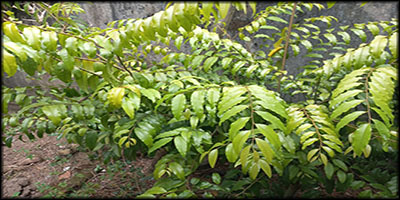
These plants are visible abundantly in some remote areas in Sri Lanka. Peasants let the plant to grow as fence of their land plots. When the leaves are crushed, it spreads to a fragrant smell. Although, it is a slow growing plant, it grows up to 3 - 4 meters in height. Moreover, the plant grows in wet zone in Sri Lanka. according to Ayurveda it has medicinal value. People like to use leaves of Malla when they are cooking jackfruit as an ingredient. Some prefer to use them to make ‘Mallum’. Fried leaves are eaten with rice. Due to its taste and wellness benefits, packeted Mella leaves can be purchased in vegetable markets in Sri Lanka.
Kahata Tree (Patana oak)
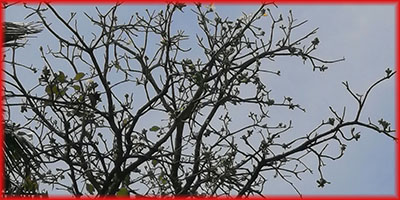
Kahata is the common name used by Sinhalese. It is known as Patana Oak in English. It grows generally up to 20 meters in height. The tree stem is surrounded by dark gray bark. This plant grows even in the dry season in Sri Lanka. Leaves seem oval and about 30 cm in length. Flowers bloom as bunches and large. They are very picturesque. Normally, flowers can be seen during the Sinhala & Hindu new year season. Immediately after the petals of the flower fall, the fruit begins to grow. Before they become large, villagers use them to cook as curry or Mallum. By mixing Jackfruit Seeds with Jackfruit Seeds, villagers promote their flavor. Further, Kahata is a essential food item in making hath Maluwa. Hal Maluwa is prepared at the Sinhala Hindi new year by adding seven different kinds of vegetables to one curry dish.
Neeramulliya (Marsh Barbel)
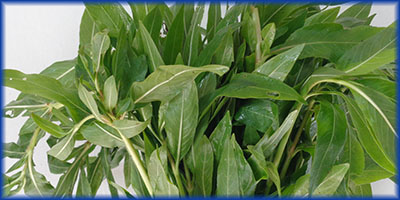
Neeramulliya is known as another name, katu ikiriya in Sri Lanka. It is grown in marshy lands. Leaves of these medical plants are used to prepare a delicious recipe in rural areas in Sri Lanka. It can be cooked with dhal or alone as acury. Rural people know the medical values of these plants. They believe that eating of Neeramulliya will be a treatment of urinary and kidney stones as well as provide relief for menstrual problems of women. The plant grows up to 60 cm in height. The stem of the plant is not firm but has thorns. The flowers are purple and to a lesser extent violet blue in color. Street venders are selling the branch of Neeramulliya leaves in some streets at low prices.
Kotta pulun tree
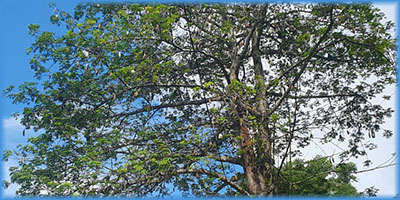
When you are travelling in Sri Lanka during May or June months, you can see a tall tree with blasted pods with white woolly fibers. They are known as Kotta Pulun gaha (Sinhala). It is also known as Silk Cotton tree in English language. Trunk of the tree is straight and greenish in color. Leaves are elongated. Pods are green when they are young. But they become brownish at the mature. They blast themselves when they are older. Then white wholly fibers come out of the pod and spread. Villagers in old Sri Lanka collects these fibers and dry in sun light. After removing the seeds from the fiber, they use them to make pillows for their own use. Sometime, village street venders sell these pillows which are made of kotta pulun (wholly fibers) along the main roads.
Heen Bovitiya
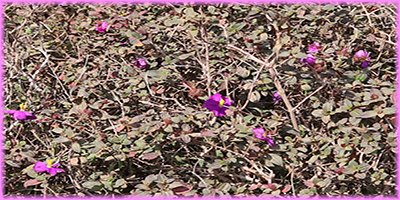
This ayurvedic plant can be seen mountainous areas in Sri Lanka. It grows up to about 2 meters tall. Pink color flowers help to identify the plant easily. The plant grows as shrubs with many branches. Village paddy farmers in Sri Lanka used to make brooms by cutting the shrubs and then tie them together. They used it to sweep threshing fields at paddy harvesting. The broom can be kept for several years securely. Similarly, leaves of the Heen Bovitiya are used to make congee (porridge). Heen Bovitiya congee gives relief for several diseases according to ayurvedic treatments. Early in the morning, street sellers sell such leaves canjee in urban areas in Sri Lanka.
Niyagala
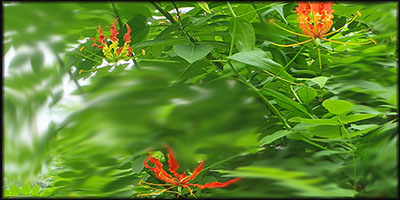
This creeper grows up to 4 to 5 meters in the ground or with the help of another tree branch. Leaves are 15 cm long and 5 cm in width. Flowers are very beautiful. Yams and flowers are very poison. Therefore, people living in villagers fear going to even near Niyagala plant. Further, peasants do not like to pluck flowers due to their poisonousness. There is a poem coming with villagers mouth “කලා රසය තිබුනොත් නියඟලා මලේ, මළා නේද කෑවොත් නියඟලා අලේ “ Even though, flowers of Niyagala are pretty, eating yams of it you will die.
Goraka (Tamarind)
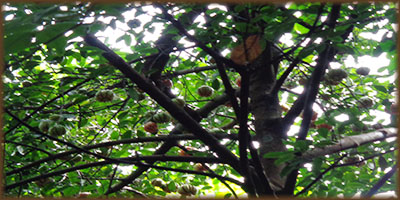
This plant grows as a large tree in village gardens in Sri Lanka. It has lot of horizontal and drooping branches. leaves are dark green in color, thick and shiny. The flesh of the fruit is mild to distinctly acidic. Six to eight seeds, 2.5 cm long and 1.6 cm wide, cling to the fruit’s flesh. young fruits are green, but it becomes yellow, when it is mature. Flesh of the fruits are acidic. Goraka are used when preparing curry dishes as an ingredient. However, some of the villagers, especially lads, eat kernel of the ripe fruits. Children can eat flesh of the ripe fruits. Some village children eat young leaves. Goraka has been used in Sri Lanka for culinary and medicinal purposes. Cultivators collect ripe goraka and keep in the sun light to dry after peeling them out. After several days in the sunlight, it turns black. Then they keep small parts of them to their home use, majority of them are to be sold to earn money. Dried Goraka can be purchased at the markets in Sri Lanka.
Sal tree (Shorea Robusta )
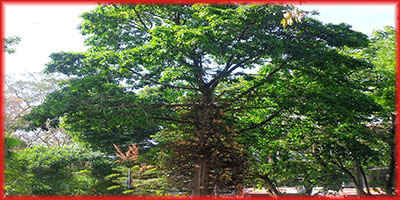
Sal tree is known as Shorea Robusta in English. This is a large deciduous tree which can be seen largely in Buddhist temple gardens. The bark is thick, rough and brown in color. The vertical lines can be noticed in the stem. Oval shape leaves tapper at the end of it. Fruits are large and ovel in shape. Flowers are very fragrant, and petals are yellowish white. During the flower season, fragrances from the flowers spread around the large area. Bunched flowers bloom up from lower part of the stem. Devotees use these flowers at the worship in the Buddhist temple.